How Hydrocarbons Form
Oil and natural gas are formed from ancient organic matter — primarily marine organisms — that was buried under layers of sediment over millions of years. Heat and pressure transformed this organic material into hydrocarbons through a process called catagenesis. These hydrocarbons then migrated through porous rock until they became trapped beneath impermeable cap rock, forming the reservoirs that operators drill today. The type of hydrocarbon produced depends on the depth of burial, temperature, and the nature of the original organic material. Shallower, cooler deposits tend to yield heavier oil; deeper, hotter ones produce lighter oil and natural gas.
Types of Wells
Modern drilling technology allows operators to reach reservoirs in multiple ways. Vertical wells drill straight down to the target formation and were the industry standard for most of the 20th century. Directional wells deviate at an angle to reach a target that is offset from the surface location — useful when the surface location is restricted or when multiple targets exist. Horizontal wells turn 90 degrees and run laterally through the reservoir, dramatically increasing the contact area with productive rock. Horizontal drilling combined with hydraulic fracturing (fracking) unlocked vast unconventional resources in shale formations across Texas, Oklahoma, Pennsylvania, and other states. Each well type carries different cost profiles, production characteristics, and risk factors.
The Drilling Process
Bringing a well from concept to production involves a sequence of distinct phases, each with its own costs and risks.
- Permitting & Location: The operator secures mineral rights (a lease), obtains state drilling permits, and prepares the surface location (a "pad").
- Spud: Drilling begins. The "spud date" is the official start of drilling and the date from which drilling time is measured.
- Drilling to Total Depth (TD): The drill bit and drill string advance through rock formations, with drilling mud circulated continuously to cool the bit and carry cuttings to the surface. Casing is set at intervals to stabilize the wellbore.
- Logging & Evaluation: Wireline tools are run into the wellbore to measure porosity, permeability, fluid saturation, and other formation properties. This data informs the decision to complete or plug the well.
- Completion: If the well shows commercial potential, the production casing is perforated and hydraulic fracturing or other stimulation techniques are applied to maximize flow into the wellbore.
- Flowback & First Production: The well is brought on line, equipment is installed, and the well is connected to gathering infrastructure.
Production & Decline Curves
Almost every oil and gas well produces at its highest rate immediately after completion, then declines over time as reservoir pressure drops and fluids deplete. This behavior is described by a decline curve — a mathematical model that forecasts future production volumes. Unconventional shale wells typically exhibit hyperbolic decline: steep initial drops (50–80% in the first year is common) that flatten out into a long, gradual tail. Conventional wells often decline more slowly and predictably. Decline curve analysis is central to calculating a well's estimated ultimate recovery (EUR) and, by extension, the economic value of a project. Participants should understand that high initial production rates do not guarantee sustained cash flow.
Surface Operations
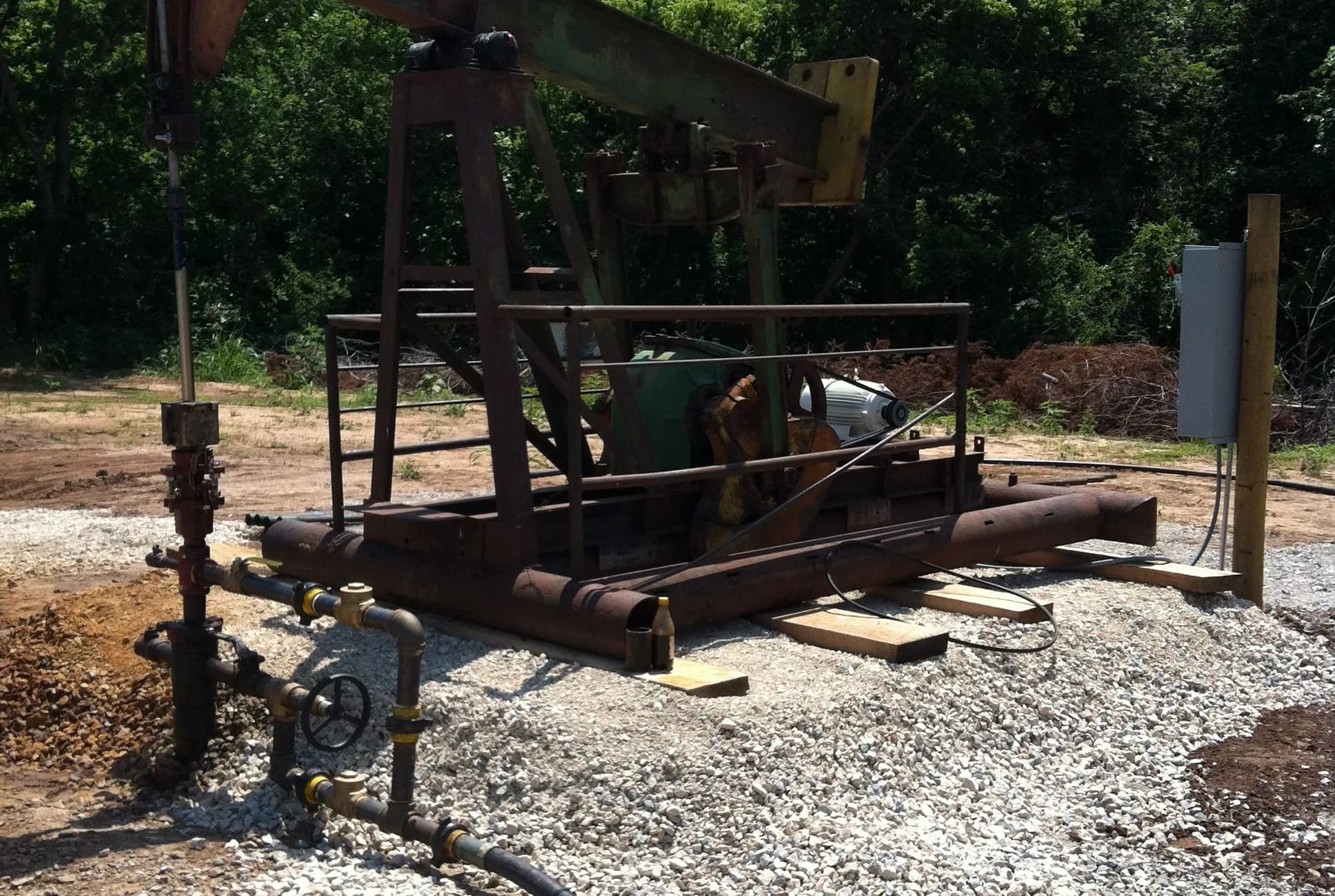
Production from the wellhead must be gathered, separated, measured, and transported before it generates revenue. At the wellsite, produced fluids pass through a separator that divides oil, gas, and water. Oil is stored in steel tanks on site until a truck hauls it to a pipeline or refinery. Gas flows into a gathering pipeline and may require compression or treatment to meet pipeline quality specifications. Produced water — often far more voluminous than oil — must be disposed of, typically by injection into permitted disposal wells. The operator (VP Operating, in our projects) manages all of these surface facilities, vendor relationships, and regulatory reporting under the operating agreement.
Regulatory Environment
Oil and gas operations in the United States are regulated at both the state and federal levels. Each oil-producing state has a regulatory commission — the Texas Railroad Commission (RRC), the Oklahoma Corporation Commission (OCC), etc. — that issues drilling permits, enforces production rules, and requires proper well plugging and surface restoration at the end of a well's life. Federal lands and offshore areas fall under the Bureau of Land Management (BLM) or Bureau of Safety and Environmental Enforcement (BSEE). The EPA sets environmental standards for air emissions, produced water disposal, and spill prevention. Operators must maintain bonds and meet ongoing reporting requirements throughout the life of each well.